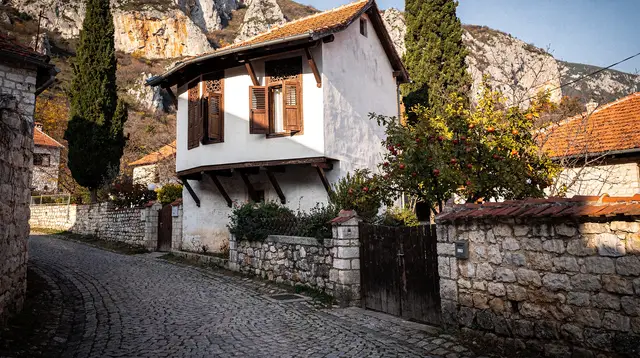
Photographing Mostar's Old Town By Day
How do you photograph Mostar's old town well during the day?
Work around the Stari Most crowds by shooting from the edges of the bridge platform or from Kujundziluk rather than its center, dress modestly and ask permission before photographing inside Koski Mehmed-Pasa Mosque, and plan for harsh midday shadows by using the arcaded bazaar streets, a polarizing filter, and short shade breaks rather than fighting the light head-on.
Shooting Mostar’s Old Town In The Middle Of The Day
Most photography advice about Mostar assumes you are free to shoot at dawn or in the last hour before sunset, when the crowds thin and the light turns soft and golden. That advice is good, and it lives on its own page — see the guide to sunrise and sunset light in Mostar if that is your plan.
This page is for everyone else: the visitor who arrives on a day trip, has a few hours between a coach and a curfew, or simply prefers to sleep in and shoot when the town is fully awake. Daytime photography in the old town is entirely possible and can be genuinely rewarding, but it means working with three constraints that the golden-hour crowd never has to think about: a packed bridge, a working place of worship, and a sun that sits almost straight overhead for most of the summer.
None of these are reasons to leave the camera in the bag. They are reasons to change what you point it at, and when.
The Crowd Around The Stari Most
The Stari Most is the single most photographed object in Bosnia and Herzegovina, and during the middle of the day it is also the single most crowded. Coaches from Dubrovnik, Split, and Sarajevo tend to arrive in waves, and the platform at the crown of the bridge fills with people taking the same photo you are trying to take. Fighting this head-on rarely works. A few adjustments do:
- Shoot from the sides, not the center. The classic postcard shot from the bridge deck is nearly impossible to get clean at midday. The riverbank paths on either side of the Neretva, and the small terraces built into the old buildings flanking the bridge, give you a clear line to the arch itself without fifty heads in the frame.
- Use the crowd rather than fighting it. A wide shot that includes the density of visitors, the flags, and the general noise of the bazaar can be a more honest and more interesting photograph than an artificially empty one. Mostar’s old town is a working tourist economy, not a museum diorama, and a picture that shows that is not a failure.
- Watch for the divers. If someone from the diving club is preparing a jump, the crowd on the bridge will visibly shift and cluster toward the parapet, which briefly clears other stretches of the platform. It is worth checking the collection box near the bridge crown; a jump is usually imminent once it fills past a certain point, and it is also worth reading how a paid jump actually works if you want to time your own shot around it.
- Come back twice. If your schedule allows even a short return visit before 9am or after 6pm, the difference in density is dramatic. You do not need full golden hour to benefit from an emptier bridge — even a grey, overcast early morning is easier to shoot than a packed midday one.
If you are set on organized help rather than working the crowd alone, a guided outing built specifically around photography, such as a private photography-focused escape into the Herzegovina countryside, moves the whole problem elsewhere: you shoot vineyards, stone villages, and open landscape rather than fighting for space on a stone bridge.
Koski Mehmed-Pasa Mosque: Photographing A Place That Is Still In Use
The Koski Mehmed-Pasa Mosque is one of the best interior and courtyard subjects in the old town, and its riverside garden offers one of the cleanest angles on the Stari Most anywhere in the city. It is also an active place of worship, not a photography set, and this is the single easiest way to get a Mostar photo trip wrong.
A few working rules:
- Dress before you arrive, not at the gate. Shoulders and knees covered, for anyone entering — this applies to the photographer as much as any subject. Scarves are usually available to borrow for women entering the prayer hall, but do not count on finding one if you show up in shorts expecting to talk your way past the entrance.
- Shoes off in the prayer hall. This is non-negotiable and applies equally to a photographer trying to get a low angle on the mihrab.
- Never photograph someone praying without asking first, and never point a lens through an open door during a call to prayer. The courtyard and the empty prayer hall are fair game outside of prayer times; a worshipper mid-prayer is not a subject, whatever the light is doing.
- The minaret climb is for the view, not for portraiture. The stairs are narrow — around ninety steps — and there is rarely room to set up a shot without blocking other visitors. Treat it as a viewpoint you pass through quickly rather than a location to work slowly. For a longer list of elevated vantage points around the city, including ones better suited to lingering, see the separate guide to Mostar’s best viewpoints, which this page deliberately does not repeat.
- Ask, don’t assume, about a fee for the minaret. Entry pricing at the mosque varies by what is included, and staff can tell you on the day whether the climb is bundled in.
Treated this way, the mosque rewards patience: the courtyard’s stonework and the garden’s angle on the bridge are available all day, and neither requires special light to work well as a photograph.
Working With Harsh Midday Light
Mostar is, on average, the hottest city in Bosnia and Herzegovina, and the old town’s stone paving and pale limestone walls throw back an enormous amount of glare between roughly 11am and 4pm in summer. Flat, high, unflattering light is the real daytime challenge here — more than the crowds, in some ways, because it affects every single frame rather than just the bridge shots.
A few practical adjustments:
- Retreat into the covered lanes. The Kujundziluk bazaar is largely built with narrow, partly shaded streets and overhanging shopfronts, which diffuse direct sun far better than the open bridge platform. Detail shots of copper trays, hammered metalwork, and shopfronts photograph far more evenly here than anything shot in full sun. If the craft itself interests you, the dedicated guide to copper craft in Kujundziluk goes further into what to look for.
- Use a polarizing filter. It is the single most useful piece of gear for a Mostar midday shoot: it cuts glare off the Neretva’s surface, deepens the sky, and tames the wash of light bouncing off pale stone.
- Shoot detail over wide scenes. Doorways, window grilles, worn stone steps, and market stalls generally hold up better at midday than a wide square shot, where flat overhead light flattens everything into the same tone.
- Build in a shade break. A short pause indoors — a courtyard museum, a covered café terrace — between roughly noon and 3pm protects your gear (and you) from the worst of the heat, and gives you a natural point to review what you have shot so far rather than pushing through fatigue.
- Carry water and refill it. Direct sun with no natural shade for long stretches means dehydration creeps up fast; see the note on tap water in Mostar for where it is safe to refill rather than buying bottles all day.
A Rough Shot List For A Midday Session
| Location | What works at midday | What to avoid |
|---|---|---|
| Stari Most, side paths | Full arch from the riverbank, away from the deck crowd | The center-deck postcard shot, unless you accept the crowd in frame |
| Koski Mehmed-Pasa courtyard | Garden angle on the bridge, stonework detail | Interior shots during prayer times |
| Kujundziluk lanes | Shaded market detail, copper craft, shopfronts | Wide open squares in direct sun |
| Minaret stairs | A quick elevated frame in passing | Slow setups that block the narrow stairwell |
| Riverside terraces | Wide shots using the crowd as texture | Fighting for an empty frame that will not happen |
Staying Alert While Shooting
A camera in hand is also a distraction, and the densest stretches of the old town — the bridge approaches and the bazaar entrances — are exactly where minor scams and overpriced offers tend to cluster. None of this is specific to photographers, but a photographer looking through a viewfinder is an easier target than someone simply walking past.
The broader guide to common tourist scams in Mostar covers this in more depth; the short version for anyone carrying gear is to keep bags zipped and close in the busiest few hundred meters, and to agree any price — for a photo with a diver, a guided detour, anything offered on the spot — before it happens rather than after.
If You Want To Get Away From The Crowd Entirely
Some of the best daytime photography around Mostar happens away from the bridge altogether. Renting a bike and riding out along the river, rather than staying inside the packed core, opens up quieter compositions with the same stone-and-water character but none of the platform crush; a bike rental in Mostar is a low-cost way to test this without committing to a full day trip.
Further out, the olive groves above the city offer a completely different daytime subject — rows of trees, dry-stone terracing, and open Herzegovina light without a single tour group in frame — and a visit built around a guided olive grove tour with oil tasting doubles as a genuinely useful midday break from the heat of the stone streets.
For a full day built specifically around images rather than sightseeing checkboxes, the dedicated Mostar photography itinerary sequences locations across a longer stretch of hours, and the photography category page lists every activity on the site with a photographic angle, including options well outside the old town’s midday crowds.
Practical Checklist For A Daytime Shoot
- Cover shoulders and knees before you reach the mosque, not after being turned away.
- Shoes off in the prayer hall; ask before photographing anyone praying.
- Shoot bridge shots from the side paths, not the packed center deck, if you want a clean frame.
- Retreat into the bazaar’s covered lanes between roughly noon and 3pm.
- Carry a polarizing filter if you own one; it is the single most useful accessory here.
- Keep bags and gear close in the densest stretches near the bridge and bazaar entrances.
- Refill water rather than buying bottled all day — see the tap water guide above for where.
- If the old town’s crowds and heat wear thin, a bike ride, an olive grove visit, or a guided countryside outing all offer a genuine change of subject within the same afternoon.
A daytime session in Mostar’s old town will never look like the empty, glowing postcard frames shot at dawn — and it does not need to. Worked with a little patience around the crowd, a little care around the mosque, and a retreat from the worst of the midday sun, it produces honest, detailed, well-composed photographs of a town that is, at that hour, simply being itself.
Frequently Asked Questions About Daytime Photography In Mostar’s Old Town
What time of day has the fewest people on the Stari Most?
There is no truly empty window in season, but the crowd thins noticeably before 9am and again after 6pm, once day-trip coaches from Dubrovnik and Split have left. Midday, especially between 11am and 4pm in July and August, is the densest and hardest to shoot cleanly.
Can I take photos inside Koski Mehmed-Pasa Mosque?
Yes, in the courtyard and prayer hall outside of prayer times, but shoulders and knees must be covered, shoes come off before entering the prayer hall, and you should avoid pointing a lens at people who are praying. Ask a staff member if you are unsure whether a particular corner is off-limits that day.
Do I need to cover my head to photograph inside the mosque?
Head covering is generally required for women entering the prayer hall, and scarves are usually available to borrow at the entrance. Men do not need to cover their heads, but shorts and sleeveless tops are not appropriate for either photographer or subject inside a working place of worship.
How do you deal with the harsh midday light in Mostar’s old town?
Retreat into the covered, arcaded stretches of the bazaar where stone walls diffuse the light, shoot architectural detail rather than wide open squares, and use a polarizing filter to cut glare off the Neretva and the pale limestone paving. A short break in shade between 12pm and 3pm also protects both you and your gear.
Is it safe to walk around Mostar’s old town with visible camera gear?
The old town is generally safe, but a visible camera and a distracted photographer are an easy target for the small scams and overpriced offers that circulate in any dense tourist core. Keep gear close in the busiest stretches near the bridge and the bazaar entrances.
Can I use a tripod on the Stari Most or in the bazaar?
A full tripod is impractical and often unwelcome on the bridge itself given the volume of foot traffic, especially in summer. A small tabletop tripod or a monopod works better in the bazaar’s narrower lanes, and a tripod is rarely needed indoors at the mosque given the available light.
What is the single biggest mistake photographers make at Koski Mehmed-Pasa Mosque?
Treating it as a photogenic backdrop rather than an active place of worship: arriving in shorts, ignoring a call to prayer already under way, or photographing worshippers up close without asking. The mosque is patient with respectful visitors and unforgiving of careless ones.
Old Bridge (Stari Most) and Old Town tours on GetYourGuide
Verified deep-linked GetYourGuide tours. Book through these links and we earn a small commission at no cost to you.
GetYourGuide does not provide a product photo for this activity — the image shows the meeting point, photographed by us.