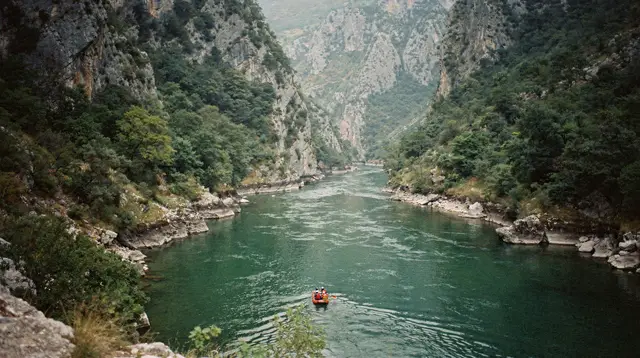
Rafting on the Neretva: A Practical Guide
Is rafting on the Neretva suitable for beginners with no experience?
Yes. Commercial rafting near Mostar and Konjic runs on class II-III rapids under professional guides, and no prior experience is required. What changes a lot is the season: the river runs higher, faster and noticeably colder in spring than in late summer, so the same stretch feels like a different trip depending on when you go.
Why rafting is the region’s signature water activity
The Neretva carves through limestone gorges on its way down from the mountains toward the Adriatic, and for a stretch of that run — roughly between the canyon above Konjic and the flatter water nearer Mostar — the current is fast enough to raft and calm enough, in the right season, to do it with a group that has never picked up a paddle before. That combination is why rafting, rather than kayaking or canyoning, is the water activity most visitors to Herzegovina actually book: it needs no experience, it works for a family with children old enough to sit still in a life jacket, and it delivers a genuine adrenaline hit without asking anyone to abseil into a gorge.
This guide covers commercial, guided rafting on the Neretva as it is actually sold near Mostar and Konjic — what the rapids are like, how much the river changes between spring and late summer, what a trip day looks like, and what it costs. It does not cover the more independent paddling covered in our kayaking guide to the Neretva and the Buna, and it is not canyoning: if what you actually want is abseiling, jumping and swimming through a narrow gorge rather than floating down a wider river in a raft, see our separate canyoning guide to the Neretva gorges instead.
Where the trips actually run
Two starting points cover almost all commercial rafting in the region, and they are not interchangeable in distance or in character.
Near Mostar. A shorter, more accessible stretch of the Neretva close to the city is used for half-day trips that fit easily around a stay in Mostar itself — no early start, no long transfer. This is the option most visitors staying in the old town choose, precisely because it does not eat a whole day.
Near Konjic, roughly 45 minutes north of Mostar by road, the river runs through a proper canyon section with a longer and generally more scenic run. Konjic trips often bundle in a riverside barbecue lunch, which turns the outing into a half-day-plus experience and is a popular option for groups. Konjic is also the base for visiting the Cold War-era Tito bunker, ARK D-0, so some visitors combine both in one day.
A third reference point worth knowing is Jablanica, further upstream again, where the canyon narrows further and paddling shifts from group rafting toward the more technical kayaking and climbing combinations covered elsewhere on this site — not the subject of this guide, but useful context if you are comparing where different water activities on the same river actually happen.
| Starting point | Distance from Mostar | Typical trip length | Character |
|---|---|---|---|
| Mostar-adjacent stretch | Minimal — starts near the city | Half day | Shorter run, easiest to fit into a Mostar stay |
| Konjic | About 45 minutes | Half day, often with a barbecue lunch | Longer canyon run, more scenic, popular for groups |
| Jablanica canyon | About 1 hour | Full day (kayak/climb combinations) | More technical, not standard group rafting |
How difficult are the rapids
Commercial rafting on the Neretva is generally graded class II to class III — a range widely considered suitable for people with no prior whitewater experience, as long as they can swim, follow instructions, and are physically able to sit and paddle for the duration of the run. This is not the same river as the high-volume, expert-only whitewater found elsewhere in the Balkans; it is a guided, group activity where the raft is steered by a professional and passengers paddle on command rather than navigate independently.
That said, “class II-III” is a description of the rapids under normal conditions, not a fixed constant. Water levels on the Neretva swing considerably across the year, and a river that is a gentle class II run in August can run noticeably pushier in April, when snowmelt and spring rain raise the volume. Reputable operators adjust the run, the safety briefing and sometimes the exact stretch to match the day’s water level — which is one more reason to book with an established operator rather than an informal setup, and to ask directly about current conditions if you are visiting in early spring.
The trap: don’t assume the river is the same trip every month
If there is one thing worth taking away from this guide, it is this: the Neretva does not flow at a constant level or temperature through the year, and treating rafting as an identical experience in April and in August will leave you either underprepared for a cold, fast spring run or expecting more drama than a mellow late-summer float actually delivers.
- Spring (April-May): higher water, faster current, colder temperatures fed by snowmelt from the surrounding mountains. Trips run, but wetsuits are standard and the ride is more physical.
- Early-to-mid summer (June-July): generally the most balanced window — warmer water, still enough flow for a proper rafting sensation, and the most reliable operating conditions.
- Late summer (August-September): the river typically runs lower and warmer. The trip is gentler and more comfortable for families and reluctant swimmers, though in a particularly dry year low water can occasionally affect which sections are run.
For a month-by-month breakdown built specifically around this variability, see our dedicated guide to the best season for rafting on the Neretva. It is also worth cross-checking against the region’s wider climate pattern: Mostar is the hottest city in Bosnia-Herzegovina in July and August, which is part of why a cooler river run feels so appealing at that time of year — but it also means the water itself has usually dropped and warmed by then, which is the opposite direction from the air temperature.
Rafting versus kayaking versus canyoning: which one is this
Three different water activities get sold around the Neretva canyon, and they are genuinely not the same thing, even though marketing sometimes blurs the lines.
Rafting (the subject of this guide) is a group activity: six to eight people plus a guide in one inflatable boat, paddling together on the guide’s commands, on class II-III water. It requires no prior experience and is the most accessible of the three.
Kayaking, covered in our separate guide to kayaking on the Neretva and the Buna, puts you solo or in a two-person kayak with far more independent control over your own line through the water — better suited to visitors who want more autonomy and are comfortable with some prior paddling experience, and it is also the activity used on the calmer Buna spring near Blagaj.
Canyoning, detailed in our guide to canyoning in the Neretva gorges, is not boating at all — it is abseiling down rock faces, jumping into pools and swimming through narrow sections of gorge. It is more physically demanding and engaging than rafting, and it is the wrong choice if what you actually want is a relaxed group float down the river.
If you are trying to decide between the three for a family group with mixed ages and fitness levels, rafting is almost always the safer default: it asks the least of any individual participant, since the guide does the technical steering.
Who this activity suits
Rafting on the Neretva is built for groups without whitewater experience, and that includes most families. Minimum ages vary by operator and by the specific stretch being run that day — commonly somewhere in the 6-to-10 range for the gentler sections — so if you are travelling with younger children, confirm the age policy directly with the operator before booking rather than assuming a blanket rule. Our guide on what age to bring children rafting or via ferrata goes into more detail on how operators actually apply these limits in practice, and our broader guide to travelling with kids in Mostar covers logistics beyond just this one activity.
Fitness requirements are modest: you need to be able to sit in a raft, hold a paddle, follow simple instructions, and swim adequately in case you end up in the water briefly (falls are uncommon but not impossible on class II-III rapids). Non-swimmers should say so when booking, since some operators will advise against participation.
What a trip day actually looks like
Most commercial rafting near Mostar and Konjic follows a similar shape:
- Pickup or meeting point. Depending on the operator, you either meet at a fixed point or are collected from your accommodation in Mostar.
- Safety briefing and gear. Life jackets, helmets and (in colder months) wetsuits are fitted, and the guide runs through paddle commands and what to do if you end up in the water.
- The river run. Typically one to two hours of actual paddling, broken by calmer stretches where the guide points out canyon scenery.
- Food. Konjic trips in particular often include a riverside barbecue lunch as part of the package; Mostar-based trips vary by operator on whether a meal is included.
- Return. Transfer back to Mostar or to the meeting point, usually finishing by mid-afternoon for a half-day trip.
Total time away from your accommodation, door to door, is usually in the range of four to six hours for a half-day trip.
Booking options and what they typically include
a half-day rafting run on the stretch of the Neretva closest to Mostar is the most convenient option if you are based in the old town and don’t want to lose a travel day to a longer transfer. For a longer canyon run with a meal included, a Konjic-based rafting trip that ends in a riverside barbecue is the better fit, especially for groups.
Travellers who prefer everything — transport, guiding and food — arranged as a single package from their Mostar accommodation often choose a full-package Neretva rafting day that includes meals and pickup. And if you’d rather pair a gentler outing with a scenic still-water stop, a guided day trip to Boračko Lake makes a good lower-key alternative or add-on for a day when the group wants a swim without whitewater.
| Option | Base | Includes a meal | Best for |
|---|---|---|---|
| Mostar city rafting | Near Mostar | Varies by operator | Shorter trip, minimal transfer time |
| Konjic rafting with BBQ | Konjic | Yes, barbecue lunch | Groups, longer canyon scenery |
| Full-package rafting with meals | Mostar pickup | Yes | Travellers who want pickup and food bundled in |
| Boračko Lake day trip | Near Konjic | Varies | A calmer alternative or same-day pairing |
Prices for a half-day rafting trip in the region typically sit in a moderate mid-range bracket compared with other guided activities out of Mostar; exact pricing depends on the season, group size and whether a meal is bundled in, so treat the figures shown on each booking page as the current reference rather than a fixed number restated here.
Getting to the starting point
If you are booking a rafting trip that does not include pickup, you will need to reach either the Mostar-adjacent put-in point or Konjic yourself. Konjic sits on the main road and rail corridor between Mostar and Sarajevo, so it is straightforward to reach independently; see our guide on getting around Mostar on foot and by local bus for local transport basics, or our guide to renting a car and crossing the border if you are self-driving in from Croatia or Montenegro.
Most visitors, though, book a package that includes transport specifically because the logistics of getting a group and wet gear to and from a riverside put-in point are easier to leave to the operator.
If rafting is one stop on a broader day rather than the whole plan, our roundup of the best day trips from Mostar puts it in context alongside waterfalls, Ottoman heritage sites and Medjugorje, and our Neretva nature itinerary is built specifically around the river and canyon rather than the town.
When to book
Given the seasonal swing in water level and temperature described above, decide your season before you decide your exact date. If you want the most dramatic, fastest water and don’t mind a wetsuit and a colder ride, aim for April or May. If you want the most comfortable, warmest conditions and don’t mind a gentler run, aim for August or September — bearing in mind this is also when Mostar itself is at its hottest, so a river trip doubles as relief from the heat in town.
June and July split the difference and are, in practice, when most commercial operators report their steadiest conditions. Check our month-by-month guide to when to visit Mostar for how rafting season overlaps with the rest of the region’s calendar.
Whichever month you choose, book a few days ahead in peak summer weeks, when Konjic and Mostar-based operators can fill up alongside the general surge of day-trippers passing through the region toward Kravice and other headline sights.
Rafting and the river’s wider context
The Neretva that carries rafters through this stretch of Herzegovina is the same river that later flows past Jablanica — where, incidentally, the 1943 Battle of the Neretva took place, an entirely different historical episode from the 1992-1995 war and one our guide on not confusing the Battle of the Neretva with the 1990s war untangles for visitors who encounter both references in the same day. None of that history affects the safety or logistics of a rafting trip, but it explains why the canyon between Konjic and Jablanica carries more than one layer of significance beyond its rapids.
Rafting on the Neretva: frequently asked questions
Do I need rafting experience to join a trip on the Neretva?
No. Commercial trips are led by certified guides on class II-III water, which is considered accessible to first-timers. You paddle as part of a crew under instruction, not solo, and the guide steers the raft through the technical sections.
What is the minimum age for rafting on the Neretva?
It depends on the operator and the exact stretch, but most family-friendly trips near Mostar and Konjic set a minimum around 6 to 10 years old. Ask the operator directly if you are travelling with younger children, since the limit is set by the specific rapids run that day, not by law.
How cold is the water, and does it change by season?
Yes, significantly. The Neretva is fed by snowmelt and karst springs, so it runs colder and higher in spring, then drops and warms through the summer. Operators provide wetsuits for the colder months; in high summer a swimsuit under a splash jacket is often enough, but this still varies year to year.
How long does a rafting trip on the Neretva last?
A typical commercial run, including the safety briefing, the paddle on the river and a stop for a meal or barbecue, takes roughly half a day. The time actually spent on the water is usually one to two hours, depending on the water level and the exact section booked.
Is rafting on the Neretva the same as kayaking or canyoning?
No, and the three are worth telling apart. Rafting is a group activity in a single inflatable boat under one guide’s instruction; kayaking on the Neretva and the Buna is done solo or in pairs with more independent paddling; canyoning is a different, more physically engaging activity involving abseiling, jumping and swimming through a gorge rather than floating down it.
Where do rafting trips on the Neretva actually start?
Most commercial rafting is based either close to Mostar on a city-adjacent stretch of the river, or further north near Konjic, upstream in the Neretva canyon. Some Konjic trips combine the river run with a barbecue lunch on the bank; check the specific starting point when you book, since it affects the transfer time from your accommodation.
What should I bring on a rafting trip?
A change of clothes, a towel, water shoes or sandals that stay on your feet, sunscreen, and a swimsuit. Wetsuits, helmets, life jackets and paddles are provided by the operator. Leave valuables at your accommodation, since everything on the raft gets wet.
When is the best time of year to go rafting on the Neretva?
Late spring through summer is the practical window for most visitors, since the water is warmer and the operating season is more reliable. Spring trips (April-May) are colder but often more dramatic, with a faster and higher river; late summer trips are gentler and warmer but can run lower in a dry year.
Rafting and kayaking on the Neretva on GetYourGuide
Verified deep-linked GetYourGuide tours. Book through these links and we earn a small commission at no cost to you.
GetYourGuide does not provide a product photo for this activity — the image shows the meeting point, photographed by us.