The Ćiro Trail: Cycling Herzegovina's Old Railway Line
What is the Ćiro Trail near Mostar?
The Ćiro Trail is a cycling and walking route built along the bed of a former narrow-gauge railway that once ran through the Neretva valley south of Mostar. Because it follows an old rail grade, it is mostly flat and away from car traffic, but surface quality and signage vary a lot from one stretch to another.
An old railway, reused as a bike route
Long before anyone thought of turning it into a cycling trail, the corridor south of Mostar carried a narrow-gauge railway that locals nicknamed “Ćiro,” after the sound and shape of the small trains that ran on it. The line connected this stretch of Herzegovina toward the coast, moving people and freight through a valley that has no other easy flat corridor between the hills. When the railway stopped operating, the graded bed it left behind turned out to be exactly the kind of infrastructure a cycling route needs: a gentle, continuous grade with no serious climbs, running mostly clear of road traffic.
That is the appeal of the Ćiro Trail today. It is not a themed loop built for tourism from scratch — it is a repurposed transport corridor, and it rides like one. Long straight or gently curving stretches, old stone underpasses, the occasional former station building still standing beside the track. For a cyclist who wants distance and rhythm rather than a short scenic loop, that is a genuinely different proposition from riding around the old town or up to Hum Hill for a viewpoint.
This guide covers that specific route, not cycling in and around Mostar in general — for the wider picture of where else you can ride in the city and the valley, the companion guide on cycling in Mostar and the Neretva valley is the better starting point.
Why a former railway makes for good cycling
Railways were built to avoid steep gradients, because trains cannot climb the way roads can. That single engineering constraint is what makes an old rail bed such a good cycling surface: no sudden ramps, no switchbacks, just a long, readable line through the landscape. In the Neretva valley south of Mostar, that means the Ćiro Trail threads between vineyards, small fields, and the karst hills of western Herzegovina without asking much of your legs.
It also means the route sits apart from the region’s main roads for much of its length, which matters more here than it might elsewhere: traffic on the Mostar–Čapljina road can be steady, and riding a shared shoulder for an entire afternoon is not most people’s idea of a relaxing ride. The old rail corridor gives you an alternative that does not fight for space with cars and trucks.
Where the route runs
The core of the Ćiro Trail, as most visitors ride it, connects Mostar with Čapljina further south in the Neretva valley, broadly tracing the corridor the narrow-gauge line once followed toward the coast. Along the way the route passes within reach of Počitelj, the fortified Ottoman-era hill town on the Neretva, and comes close enough to the Roman villa site at Mogorjelo that a short detour is worth considering if you have the time and legs left.
Exact distance figures for the ride vary by source, depending on where a given map starts and stops counting, so it is more useful to think in terms of a half-day outing than to fix on a specific kilometer count. Ask whoever rents you a bike, or the operator running a guided ride, for the current start and end points they use — this is the kind of practical detail that is worth confirming on the day rather than trusting to an old blog post.
The trap: don’t expect one uniform trail
The single most important thing to know before setting out is that the Ćiro Trail is not evenly maintained along its whole length, and treating it as if it were is the easiest way to have a frustrating afternoon.
Close to Mostar and around Čapljina, stretches tend to be asphalted or covered in a firm, compacted surface, with reasonably clear signage pointing the way. Move further from these two towns, though, and conditions can change quickly: sections turn to loose gravel or bare dirt, waymarking thins out or disappears at junctions, and the trail can momentarily merge with a farm track or a quiet local road before picking up again. In a few places, an old bridge or crossing has not been kept in a state that suits every kind of bike, and riders end up taking a short detour onto asphalt to get around it.
None of this makes the ride impractical — plenty of people cover it every season — but it does mean you should plan for a mixed surface, not a manicured, uniformly signed greenway. A hybrid bike or anything with slightly wider, more forgiving tires copes far better than a narrow-tired road bike. If in doubt about a specific stretch on the day, a local rental shop or guide will usually know which sections are currently in good shape and which have deteriorated since the last time the route was cleared.
Renting a bike versus riding with a guide
Most visitors approach the Ćiro Trail one of two ways: renting a bike in Mostar and following a map or GPS track independently, or joining a guided ride that handles navigation and, often, transport back to the city at the end.
renting a bike in Mostar is the simplest option if you are comfortable navigating and want to set your own pace — useful if you plan to stop often at Počitelj or linger near Čapljina. For the route itself laid out as a ready-made outing, a self-guided ride from Mostar toward Čapljina comes with the route mapped out and, typically, transport arranged for one leg of the trip, which removes the guesswork over where the good surface actually is on a given day.
If you would rather not deal with navigation or the patchier stretches at all, a guided cycling tour that also takes in Mostar’s own sights combines a supported ride with some of the city highlights, which suits a shorter visit better than a half-day dedicated purely to the railway route. And for a longer, harder day that goes well beyond the old railway line, a road-bike day trip into Bosnia and Herzegovina run from the Dubrovnik side is aimed at a fitter rider looking for real mileage and some climbing, not the flat rail-bed ride described here.
Practical planning
| Consideration | What to expect |
|---|---|
| Terrain | Mostly flat, following an old railway grade; very little sustained climbing |
| Surface | Asphalt or hard-packed near Mostar and Čapljina; gravel, dirt, or informal detours further out |
| Signage | Reasonably clear near the towns at each end; thinner or absent on quieter stretches |
| Bike type | Hybrid or gravel-capable bike recommended over a narrow-tired road bike |
| Season | Best in the cooler months or early/late in the day during summer — see below |
| Water and shade | Long open stretches with little shade; carry more water than you think you need |
Given how hot Mostar and the surrounding valley get in summer, the timing advice for the summer heat in Mostar applies just as much on a bike as on foot — riding an exposed rail corridor at midday in July or August is a different experience from the same ride in May or late September. If you are trying to decide which weeks suit outdoor riding best, the month-by-month overview in when to come to Mostar is worth checking before you book anything.
Getting a rental bike to and from the trail’s endpoints usually means a short taxi or transfer, since Mostar’s own getting around on foot and by local bus does not extend as far as Čapljina. If you are combining the ride with a wider road trip and driving yourself between towns, the border-crossing notes in renting a car and crossing the border are relevant background even for a day that stays entirely within Bosnia, since car logistics around Herzegovina often involve more than one border in a single trip.
What to bring
A basic repair kit — spare tube, tire levers, a multi-tool — is worth carrying given the mixed surfaces; a flat well away from either town is more of an inconvenience here than on a paved city loop. The general packing logic in the Herzegovina hiking checklist transfers reasonably well to a long cycling day too: water, sun protection, and a way to patch minor problems yourself rather than relying on passing help.
Because the route runs through farmland and open countryside rather than waymarked forest trails, it does not carry the same landmine caution that applies to genuinely rural, off-path terrain elsewhere in Herzegovina — but it is still sensible to stay on the trail and any marked detours rather than cutting across a field to shortcut a rough patch.
Combining the ride with the rest of the valley
Because the trail passes close to Počitelj and within reach of Čapljina and Mogorjelo, it fits naturally into a broader look at the Neretva valley rather than standing alone as a single-purpose outing. The Neretva nature itinerary groups several of these stops together for anyone building a full day or two around the river and its surrounding countryside, and if you would rather not rent a car at all for your stay, the Mostar without a car itinerary shows how a day like this slots in alongside public transport and organized excursions.
For a broader look at cycling options in the region beyond this one route — including easier loops closer to the city — the cycling category page collects the relevant activities and operators in one place, and towns further along the valley such as Konjic and Jablanica offer their own riding and outdoor options if you want to extend a cycling-focused trip north along the Neretva rather than south toward Čapljina.
Booking a guide: what to actually look for
Not all guided experiences in Mostar are built the same way, and the difference matters more than most visitors assume before they arrive. A large coach group moving through the old town on a fixed script is a very different experience from a small private walk that can adapt to your questions, and the gap shows up most on exactly the material this page has been describing — the Bulevar, the cemetery, the layered postwar politics.
A guide rushing eight stops in ninety minutes for forty people has little room to answer a follow-up question about why the front line ran where it did; a guide with four people has all the room in the world. If a guide is part of your plan at all, the private guided tours in Mostar page goes into how to tell these formats apart before you book, and the private driver and guide option is worth knowing about if your trip extends beyond the city itself, since it solves both the interpretation question and the transport question in one booking.
Group size isn’t the only variable. Language matters too — a guide fluent in the nuance of the war years in your own language will explain the Bulevar very differently from one working through a second or third language under time pressure, and it’s a fair question to ask before booking rather than after. So does the guide’s own background: some are locals who lived through the 1990s directly, others are trained historians without that lived experience, and both bring something real but not the same thing. None of this shows up in a tour listing’s star rating, which is exactly why it’s worth a direct question to whoever you’re booking through rather than assuming any two “Mostar old town tour” listings are interchangeable.
The coach-tour version of “guided”
There’s a specific version of the guided option worth calling out separately, because it behaves differently from the small private walk described above: the day-trip coach tour that stops in Mostar for two or three hours as one leg of a longer loop, often departing from the coast. This is an extremely common way to see the city, and it comes with its own tradeoffs that have little to do with the guided-versus-independent question in the abstract. The coach tourism Mostar can’t escape piece looks at what that format actually delivers and where it falls short, and it’s worth reading before assuming a big bus tour and a small private guided walk are the same product wearing different price tags.
If you’re weighing this specific format against staying independently and overnight, day trip or stay addresses that decision directly, and if the coach is arriving from the coast specifically, private transfers from Dubrovnik and Split lays out an alternative that keeps the flexibility of independent travel while still solving the transport problem a coach tour solves.
Independent visiting with children or mobility needs
The guided-versus-independent calculation shifts again if you’re traveling with kids or with anyone who needs step-free routes. A structured guided walk moves at an adult pace and on a fixed schedule, which is not always what a family with young children wants, even setting aside interest in the war history; independent visiting lets you break the day into shorter stretches, skip a sight if patience runs out, and time things around naps rather than a group’s schedule.
The traveling to Mostar with children guide and the Mostar with kids itinerary both assume independent pacing as the default for exactly this reason. Wheelchair users and anyone with limited mobility face a different but related consideration — the old town’s cobbled lanes and the bridge itself are not uniformly step-free, and this is true whether you’re walking with a guide or without one, so it’s worth checking the wheelchair accessibility guide regardless of which format you choose, since a guide can narrate around an obstacle but can’t remove it.
Combining the decision with your route in and out
Whether a guide makes sense also depends on how you’re arriving and how much of Herzegovina you’re planning to see beyond Mostar itself. Someone renting a car and touring the wider region independently — the car rental versus organized tour comparison covers that broader choice — tends to default to independent visiting inside Mostar too, simply because the rest of the trip is already self-directed and a single guided morning breaks that rhythm less than it might for someone who has organized nothing else.
Someone arriving by the slow route to Sarajevo or via the train between Mostar and Sarajevo, on the other hand, often has a tighter window in the city and gets more out of a guided morning that front-loads the history efficiently before they move on.
If Mostar is one stop on a wider loop through the region, the Herzegovina road trip itinerary and the one week in Bosnia and Herzegovina itinerary both assume you’ll make this guided-or-independent call separately for each stop rather than once for the whole trip — a guide in Mostar for the war history, say, but independent time at Kravice or Blagaj, where the appeal is scenery rather than interpretation.
What locals actually think about the two formats
It’s worth being honest about a tension that guided tours sometimes paper over and independent visits sometimes miss entirely: not everyone in Mostar agrees on how the war and its aftermath should be presented to visitors, and a guide’s framing reflects their own background as much as any settled consensus. This is part of why the cevapi diplomacy piece and the avenue that still divides Mostar are worth reading as a check against any single guide’s narrative, guided or not — they’re written from outside the tour-guide framing and cover ground that a two-hour walk, however good, necessarily compresses.
Similarly, the monument most visitors walk past makes the case for exactly the kind of site a guide is most useful for pointing out, precisely because independent visitors so reliably miss it. None of this argues for one format over the other; it argues for treating whichever one you choose as a starting point rather than the final word on a city whose recent history is still actively contested by the people who live it.
A note on cost, concretely
Numbers help more than general statements here. A private guided walk of the old town typically runs to a per-person fee on top of whatever entry tickets you’d pay anyway, while an independent visit costs only those entry tickets — the Koski Mehmed-Pasa mosque, say, or the Ottoman house-museums mentioned earlier. For an exact sense of what a day in Mostar costs either way, the how much does Mostar cost guide and what a day actually costs both break down guided and unguided budgets side by side, which is a more useful comparison than a single average figure, since a family of four adding a guide fee per person faces a very different calculation from a solo traveler doing the same.
Getting there and back without your own car
Most visitors reach the start of the ride from central Mostar, and the practicalities of getting a bike, rider, and gear to the trailhead are worth sorting out before the day itself rather than on the morning of the ride. If you are not driving yourself, the general notes on walking and local buses in Mostar give a sense of what public transport can and cannot do here — in short, it does not reach as far as Čapljina in any convenient way, which is why most rentals and guided rides arrange their own transfer for at least one leg of the trip.
Travelers arriving from further afield, such as Split or Dubrovnik, sometimes ask whether the Ćiro Trail can be folded into a single long day trip from the coast. It is possible in theory, but the driving time alone from either city eats into the hours available for the ride itself, so most people who want to combine a coastal base with this specific trail plan for an overnight in Mostar rather than a same-day round trip — a trade-off similar in shape to the one described in the Dubrovnik day-trip tradeoff, even though that piece is written with sightseeing rather than cycling in mind.
Equipment specifics beyond the basics
Beyond the repair kit and water already mentioned, a few smaller details make a real difference on a ride this length. Padded gloves reduce fatigue on the rougher, unpaved stretches, where the ground transmits more vibration than a smooth road surface would. A simple frame pump or a compact CO2 inflator is worth carrying even if your rental bike comes with one, since a shared rental fleet does not always guarantee a working pump on every unit. Sunglasses matter more here than on a shaded forest trail, given how much of the route sits in open, unshaded farmland — the same exposure that makes the seasonal timing advice above worth taking seriously.
If you are riding a rental bike rather than your own, take a few minutes at pickup to check saddle height, brake function, and tire pressure before setting off, rather than discovering an issue a few kilometers down an unpaved stretch with no shop in sight. This is a minor point, but it is the kind of small friction that turns an easy half-day ride into an uncomfortable one, and it costs nothing to check before you leave the rental shop.
Who this ride suits, and who it does not
The Ćiro Trail is best suited to visitors who want a relaxed, scenic half-day outside the city without technical difficulty — the flat grade means fitness requirements are modest, and the mixed surface, while occasionally rough, does not demand mountain-biking skill. It is a reasonable match for the kind of moderate outdoor activity described more generally in the Herzegovina hiking packing checklist, even though that guide is written primarily with walkers in mind rather than cyclists.
It is a poorer match for anyone specifically chasing elevation gain, technical singletrack, or a full-day endurance ride — those riders are better directed toward the road-focused options mentioned earlier, or toward the hill country around Blagaj and the Prenj massif if what they actually want is climbing rather than a flat corridor. It is also, by virtue of the surface variability described above, not the easiest introduction to cycling for a rider who has never handled a bike outside a paved city bike lane; a first-timer might be better served starting with a shorter loop closer to Mostar before attempting the full Čapljina run.
Booking logistics and what to confirm in advance
Whichever option you choose — independent rental, self-guided route package, or fully guided ride — it is worth confirming a short list of details before the day: the exact start and end points being used that season, whether a helmet is included, what happens in the event of a mechanical problem partway along the route, and how the return transfer works if you are not planning to ride back the way you came. Operators and rental shops vary in how much of this they spell out upfront, and a five-minute conversation before booking saves a great deal of uncertainty on the day itself.
Weather is the other variable worth checking close to your date rather than weeks in advance — a route with long exposed stretches and patchy surfaces is considerably less pleasant in heavy rain, and some rental shops will suggest rescheduling rather than sending riders out in poor conditions. None of this should discourage a booking; it simply reflects the same practical, unglamorous planning that applies to most outdoor activity in this part of Herzegovina, where infrastructure is real but not always signposted to the standard a first-time visitor might expect.
Ćiro Trail cycling: frequently asked questions
Is the whole Ćiro Trail paved and signposted?
No. Sections close to Mostar and Čapljina tend to be asphalted or hard-packed and reasonably well marked, while stretches further out can turn to loose gravel, disappear into a farm track, or lose their waymarking entirely. Treat any map of the route as a rough guide, not a guarantee of surface or signage.
How long is the ride and how hard is it?
Riding the Bosnian section between Mostar and Čapljina is generally an easy half-day outing for a fit beginner, since there is almost no climbing. Distance figures quoted online vary depending on where you start and finish, so check the specifics with whoever rents you a bike rather than trusting a single number.
Can I ride it without a guide?
Yes, self-guided riders cover this route regularly, usually with a rental bike and a downloaded map or GPS track. A guided option exists for anyone who would rather not navigate the patchier sections alone.
Where does the route actually go?
It runs through the Neretva valley south of Mostar, passing near Čapljina and within reach of Počitelj, broadly following the corridor once used by the narrow-gauge trains that linked this part of Herzegovina toward the Croatian coast.
What should I bring?
A repair kit, more water than you think you need, and sun protection, since long stretches run through open, shadeless farmland. A hybrid or gravel-capable bike copes better with the rougher sections than a pure road bike.
Is this the same as general cycling in Mostar?
No. This guide covers one specific long-distance route; day-to-day cycling around Mostar itself and in the wider Neretva valley is covered separately.
What does the name Ćiro mean?
Ćiro was the affectionate nickname locals gave the narrow-gauge trains that once ran on this line. The trail keeps the name even though the trains themselves stopped running long ago.
Cycling and e-bike tours on GetYourGuide
Verified deep-linked GetYourGuide tours. Book through these links and we earn a small commission at no cost to you.
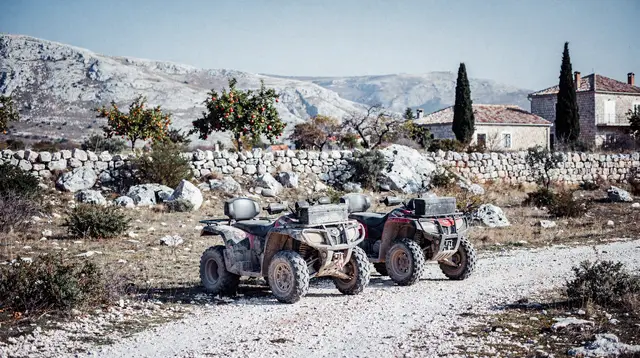
GetYourGuide does not provide a product photo for this activity — the image shows the meeting point, photographed by us.