Climbing Krizevac and Apparition Hill: What the Terrain Really Demands
How hard is it to climb Krizevac and Apparition Hill in Medjugorje?
Both climbs are short by mountain standards but genuinely rocky and uneven underfoot, not gravel paths. Krizevac is about 2.5 km round trip with roughly 200 m of elevation gain over sharp limestone; Apparition Hill is shorter and lower but no less stony. Sturdy closed shoes, water, and sun protection matter more than fitness.
Two Hills, Two Very Different Climbs
Međugorje sits between two low limestone hills that dominate every itinerary built around the village: Krizevac, the Hill of the Cross, and Podbrdo, universally known as Apparition Hill. Both are described in guidebooks and parish literature as walks, and in a loose sense they are — neither requires ropes, technical gear, or mountaineering experience. But “walk” undersells what the ground actually feels like underfoot on either path. This page is only about the physical climb itself: what the terrain is like, how long each hill takes, what to wear, and what to carry.
It does not cover how to plan a pilgrimage stay in Međugorje more broadly, for which the practical pilgrim’s guide is the better starting point, and it does not weigh in on the question of belief, which is addressed separately in Međugorje for believers and skeptics. If you are simply trying to work out whether you can physically manage these two climbs, and how to equip yourself for them, this is the page.
The trap: this is not a village stroll
The single most common mistake visitors make is picturing these hills as an extension of the paved, souvenir-shop streets around the parish church — a flat, easy walk to a viewpoint. Both Krizevac and Apparition Hill are, in reality, unmarked scrambles over loose, sharp limestone rubble for most of their length. There is no gravel path, no graded surface, and in many stretches no clear single trail at all — just a wide field of stones where pilgrims have worn several parallel routes over the decades.
Rocks shift underfoot. Some are large and stable; others roll or tip the moment weight lands on them. Ankles turn easily here, and so do knees on the way down, when gravity adds speed to already unstable footing. Visitors who arrive in sandals, flat dress shoes, or worn-out trainers regularly turn back partway up, or finish the climb with cut feet and sore ankles. Treat both hills as a genuine, if short, hike over rocky ground — not a walk to a car park viewpoint — and the rest of the planning becomes straightforward.
Krizevac: the Hill of the Cross
Krizevac takes its name from the large concrete cross built at its summit in 1933 by the villagers of Međugorje, to mark the 1900th anniversary of the crucifixion — a project that predates the 1981 apparitions by half a century and has nothing to do with them directly, though the two are inseparable in the pilgrimage that has grown around the village since. The cross itself stands roughly 8.5 metres tall and is visible from much of the Međugorje valley, which is part of why the hill draws so many climbers: it is the most recognisable landmark for kilometres around.
The climb itself starts from a marked trailhead on the edge of the village and covers roughly 1.2 to 1.3 kilometres one way, gaining a little over 200 metres of elevation to the summit — call it 2.5 kilometres and 45 minutes to well over an hour for the round trip, depending on pace, crowding, and how many stops are made along the way. Fourteen Stations of the Cross, cast in bronze relief, mark the route at intervals and give natural pause points, which most pilgrims use — both for prayer and simply to catch their breath.
The gradient is steady rather than punishingly steep in most sections, but the loose stone surface means every step demands attention regardless of fitness level. There is very little shade on the way up, which matters enormously in a region where Mostar itself is the hottest city in Bosnia-Herzegovina and Međugorje, only a short distance away, shares the same exposed, sun-baked climate through the summer months.
Coming down is, for many people, harder than going up. Loose rock that grips reasonably well underfoot on the ascent becomes a hazard on the descent, when body weight shifts forward and downward with each step. Give the way down as much time and care as the way up, and resist any urge to hurry simply because the effort feels smaller in that direction.
Apparition Hill: shorter, but no gentler underfoot
Podbrdo — Apparition Hill — is the site associated with the original 1981 reports and carries a bronze statue of Our Lady near the spot pilgrims regard as the location of the apparitions. It is shorter and lower than Krizevac, with a round trip that most visitors complete in 40 minutes to an hour, including time to pause at the statue and the small shrine areas along the way.
The shorter distance and lower elevation gain can create a false impression that this is the “easy” hill of the two. In terms of footing, it is not. The surface is, if anything, just as uneven as Krizevac’s — the same loose limestone, the same absence of a single clear graded trail, the same need for careful, deliberate steps rather than a brisk walking pace. Visitors who treat Apparition Hill as a quick, casual add-on to a day already spent elsewhere in Međugorje sometimes underdress for it in exactly the way they would not for Krizevac, and end up with the same cut ankles or stumbles as a result. Judge the hill by its terrain, not by its shorter distance.
Krizevac vs. Apparition Hill at a glance
| Krizevac | Apparition Hill (Podbrdo) | |
|---|---|---|
| Round-trip distance | About 2.5 km | Shorter, roughly half that distance |
| Elevation gain | About 200 m | Noticeably less |
| Typical round-trip time | 45 min to over 1 hour | 40 minutes to 1 hour |
| Surface | Loose, sharp limestone rubble throughout | Equally rocky and uneven |
| Shade | Very little | Very little |
| Marked stops | 14 Stations of the Cross | Statue and shrine points along the way |
| Barefoot pilgrims | Common | Common |
Footwear: the one decision that matters most
If there is a single piece of advice worth repeating on this page, it is about shoes. Closed, sturdy footwear with a thick, grippy sole — broken-in hiking shoes, trail runners, or robust trainers — is the difference between a manageable climb and a miserable one on both hills. Sandals, flip-flops, thin ballet-style shoes, and worn-down soles offer almost no protection against sharp stone edges and no real ankle support on uneven ground. This applies regardless of how devout or casual the visit is: the rock does not distinguish between a pilgrim and a sightseer.
Socks matter too — thin dress socks or none at all leave feet more exposed to blisters over an hour of uneven walking than a proper hiking sock would. Anyone prone to ankle rolls should also consider that neither hill has railings, ropes, or any artificial support structure along the climbing sections; balance and footwear are the only real safeguards.
What else to carry
- Water. There is nowhere to buy any once you start climbing either hill, only stalls and small shops near the base. Carry more than you think you will need, especially in the warmer months.
- Sun protection. A hat and sunscreen matter on both hills, which offer almost no shade for most of their length. This is doubly true given how hot the wider region gets in summer — see when to come to Mostar, month by month for a fuller picture of the seasonal heat that also applies to Međugorje. A packing checklist built for the whole region, not just Mostar’s old town, is covered in what to pack for hiking in Herzegovina.
- A small first-aid kit or at least adhesive bandages. Cuts and scrapes from loose stone are common enough that a small kit is worth the negligible extra weight.
- Walking poles, optional but useful. They help most on the descent, where footing is least forgiving.
- Cash in small denominations. Vendors near both trailheads sell water, candles, and religious items, and small bills are more useful than large ones.
The barefoot climbers
Anyone spending even a short time at the base of either hill will notice pilgrims climbing without shoes, often moving slowly and deliberately over the same sharp rock that makes sturdy footwear essential for everyone else. This is a long-standing and visible form of devotion at Međugorje, undertaken as a personal act of penance or prayer, and it is treated with quiet respect by other visitors rather than curiosity or comment. It is not an expectation placed on casual visitors, and nothing about this guide’s advice on footwear is in tension with it — those who choose to climb barefoot are making a deliberate, informed choice about the same terrain described above, not overlooking it.
Timing the climb around the heat
Because both hills offer almost no shade, the hour of the day matters as much as the season. Late morning through mid-afternoon in July and August routinely pushes temperatures well past 30 degrees Celsius in this part of Herzegovina, and a rocky, sun-exposed slope amplifies that heat rather than tempering it.
Climbing in the first hours after sunrise or in the last hours before sunset is markedly more comfortable, and it also tends to mean fewer other climbers sharing the narrower sections of trail. Visitors combining a hill climb with a wider day trip — for instance one built around a day trip to Međugorje and Kravice from Mostar — should plan the climb for the cooler end of the day rather than treating it as whatever slot happens to be left over at midday.
Independent climb or guided visit
Both hills can be climbed entirely independently — the trailheads are well known, close to the village centre, and used by enough pilgrims each day that finding the way is not the issue; the terrain is. Visitors who prefer not to navigate logistics themselves, or who are combining the climb with a wider Herzegovina itinerary from Split, Dubrovnik, or Mostar, often book it as part of a guided visit instead.
A private tour to Međugorje that includes time at Apparition Hill folds the climb into a guided day without any logistics to arrange, while a guided walking tour of the village paired with a museum visit suits visitors who want context around the site alongside the physical climb.
Those travelling from further afield can look at a private day tour to Međugorje departing from Split, while a guided Međugorje tour with transport included from Mostar covers the short hop from Mostar itself.
None of these options change what the climb demands physically — the same rocky ground and the same footwear advice apply whether you arrive independently or as part of an organised group. For a broader comparison of self-driving versus booking a guide for the region, see renting a car versus an organised excursion and Mostar as a day trip or a longer stay.
Who should think twice
Neither hill is impossible for older visitors, children, or anyone with mild mobility limitations, but neither is a safe assumption either. Apparition Hill is the more forgiving of the two by distance and elevation, and is the more realistic option for families or visitors with limited stamina — a topic covered in more depth in travelling to Mostar with children and what age is right for rafting and via ferrata as a family, both of which touch on judging activity difficulty for younger climbers.
Krizevac’s greater length, steeper sections, and longer exposure to sun make it a harder case for anyone with significant knee, hip, or balance problems. Visitors with mobility constraints who are unsure whether either climb suits them should also see accessibility in Mostar for visitors with reduced mobility, which addresses uneven terrain more generally across the region. There is no shame in viewing either hill from its base rather than climbing it — both remain visible and meaningful landmarks from the valley floor, cross and statue included.
Getting oriented before you climb
Both trailheads sit within easy walking distance of Međugorje’s parish church and the main pilgrim-facing streets, so no separate transport is usually needed once you are in the village itself. Visitors staying elsewhere in Herzegovina and combining the climbs with a longer pilgrimage route can see how the two hills fit into a fuller day or multi-day plan on the Međugorje pilgrimage itinerary, and can find the wider village and site listing on the Međugorje destination page and its things-to-do listing for Međugorje.
Via ferrata and climbing on GetYourGuide
Verified deep-linked GetYourGuide tours. Book through these links and we earn a small commission at no cost to you.
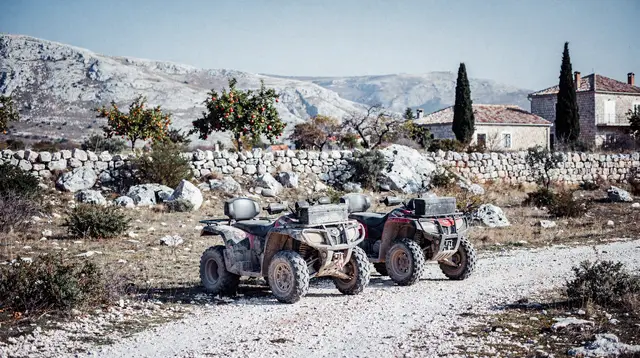
GetYourGuide does not provide a product photo for this activity — the image shows the meeting point, photographed by us.